11 Best AI Voice Generators 2026 - Free & Paid Text to Speech Tools Compared

Updated January 2026 with the latest pricing, features, and comprehensive testing of every major AI voice generator on the market. After testing 30+ text-to-speech tools, we’ve identified the 11 best options for content creators, businesses, and accessibility needs.
AI voice generators have revolutionized audio content creation. Whether you need voiceovers for videos, accessibility features, or AI-powered narration, modern text-to-speech technology delivers natural, expressive voices that rival human recordings. This guide compares pricing, voice quality, language support, and real-world performance across the best AI voice generators in 2026.
Related AI and Audio Tools: For comprehensive audio processing workflows, explore our AI tools for audio guide, or check out our best audio summarizers for analyzing voice content. Additionally, our top online voice recorders covers tools for capturing and processing audio content.
Best AI Voice Generators 2026 - Quick Comparison
| Tool | Free Tier | Paid Plans | Voice Quality | Languages | Best For |
|---|---|---|---|---|---|
| ScreenApp | 3 audio files | $19/mo annual | Excellent | 60+ | Integrated video workflows |
| ElevenLabs | 10k characters | $5-99/mo | Industry-leading | 29+ | Professional voiceovers |
| Speechify | 10 basic voices | $11.58/mo annual | Very good | 60+ | Reading assistance |
| Murf.ai | 10 min generation | $19-39/mo | Excellent | 20+ | Marketing content |
| Play.ht | 12,500 characters | $19-99/mo | Very good | 142+ | Content creators |
| Fish Audio | Limited trial | $5.50/mo | Excellent | Multiple | Low-latency TTS |
| Narakeet | 20 uses free | $0.20/min | Good | 90+ | Video automation |
| Lovo.ai | 14-day trial | $24+/mo | Very good | 100+ | Voice cloning |
| Azure TTS | 500k characters | Pay-as-you-go | Good | 140+ | Developers/enterprises |
| Google Cloud TTS | 1M characters | $4-16/1M chars | Very good | 220+ | Integration projects |
| Amazon Polly | 5M characters | $4/1M chars | Good | 60+ | AWS ecosystem |
Introduction
As the digital landscape continues to evolve, the advent of artificial intelligence (AI) has brought about ground-breaking advancements in numerous fields. Among these, the development of AI voice generators, capable of creating lifelike, synthetic human voices, stands as a testament to the strides AI has made in replicating human-like behavior.
AI voice generators utilize sophisticated algorithms to transform the text into audible speech, opening a world of possibilities from generating voiceovers for videos, aiding in accessibility for the visually impaired, to even providing personal digital assistants with unique, identifiable voices. Their importance is undeniable as they reshape the way we interact with technology, making it more human-centric and accessible.
In this era of rapid technological growth, finding reliable, affordable, and best AI tools is essential. For comprehensive AI tool comparisons, check out our 10 best free AI chatbots guide. That’s why we’ve taken the time to evaluate and compile a list of the top 10 free AI voice generators available today. This article aims to guide you through the varied landscape of free AI voice generation tools, highlighting their features, benefits, and potential applications, so you can find the one that best suits your needs. Let’s dive into the transformative world of AI voice synthesis.
Understanding AI Voice Generators
AI voice generators, at their core, employ intricate technologies such as Natural Language Processing (NLP) and Text-to-Speech (TTS) synthesis. The process begins with NLP, where the text input is analyzed, and linguistic properties such as syntax, semantics, and sentence structure are understood. This stage is crucial for the accurate conversion of text into spoken words, ensuring the right pronunciation and emphasis.
The processed text then moves to the TTS synthesis stage. Here, the data is translated into spoken words. Some AI voice generators utilize complex neural networks to create more human-like speech, mimicking the intonation, stress patterns, and rhythms found in natural human speech.
There are several benefits of using AI voice generators:
- Efficiency and Speed: AI voice generators can convert large amounts of text into speech quickly, saving time compared to manual voice recording.
- Cost-effective: They eliminate the need for professional voice actors, reducing costs significantly, especially for businesses.
- Versatility: AI voice generators often offer a range of voice options, accents, and languages, providing flexibility for various applications.
- Accessibility: For individuals with visual impairments or reading difficulties, AI voice generators make content more accessible.
When selecting an AI voice generator, it’s crucial to consider the quality of the voice output, language and accent options, and diversity in voice styles. The ideal choice would depend on the specific use case and individual requirements.
The Importance of Free AI Voice Generators
While premium voice generators may offer more features, the availability of free options is crucial for various reasons. Firstly, free AI voice generators allow individuals and small businesses with limited budgets to leverage this technology. They democratize access to voice synthesis technology, opening up opportunities for more people to create and innovate.
Free options are also invaluable for trial purposes. Before investing in a premium tool, users can try out different free voice generators to find the one that best suits their needs.
However, the potential limitations of free options should not be overlooked. These might include restrictions on usage (like the number of words or times you can use the generator per day), limited voice options, or lower quality of voice output compared to premium versions. Some free tools may also include watermarks or promotional content in the output. Despite these limitations, free AI voice generators still offer considerable value and are an excellent starting point for those venturing into AI voice synthesis.
11 Best AI Voice Generators 2026 - Detailed Reviews
1. ScreenApp - Best All-in-One AI Voice & Video Platform
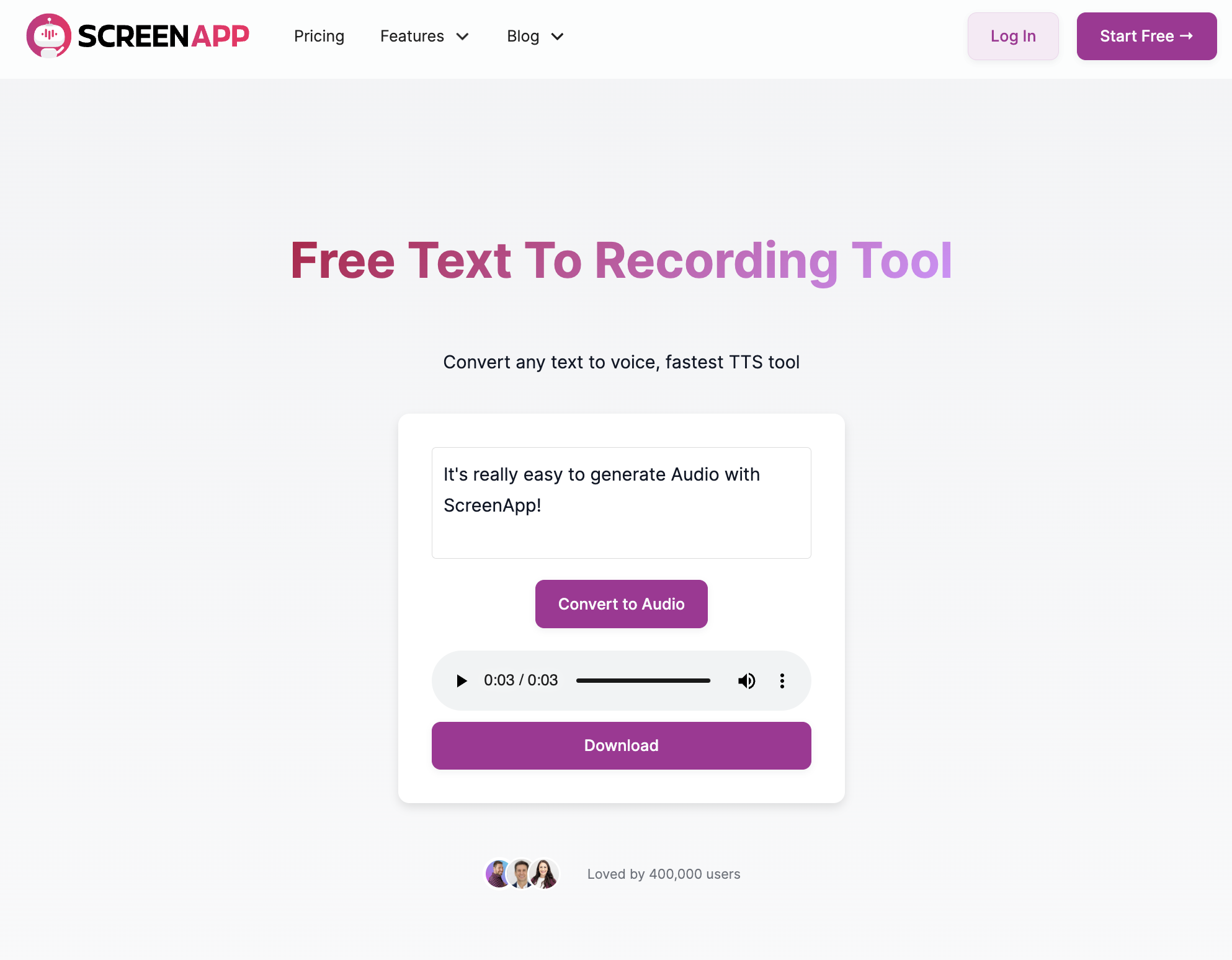
ScreenApp ranks #1 for integrated workflows that combine text-to-speech with video recording, transcription, AI chat, and search. Unlike standalone TTS tools, ScreenApp provides a complete platform for creating, analyzing, and repurposing video content with AI-powered narration.
Why ScreenApp Stands Out:
- Complete video platform with TTS integration
- Affordable pricing at $19/month annual (Business: $34/month)
- 3 free audio files monthly with no watermarks
- Works seamlessly with screen recording and video editing
- AI Q&A for video analysis included
Key Features and Benefits
- Natural AI Voices: Clear, professional-quality text-to-speech in 60+ languages with customizable speed and tone
- Video Integration: Add AI voiceovers directly to screen recordings and video edits without switching tools
- Multiple Export Formats: Download as MP3, WAV, or embed directly in video projects
- Batch Processing: Convert multiple scripts to audio simultaneously
- Commercial Rights: Full commercial usage included in all paid plans
- No Watermarks: Even free tier provides clean audio files
Pricing (2026)
- Free: 3 audio files per month, basic voices, commercial use allowed
- Growth: $19/month annual ($228/year) - 600 AI credits/year, premium voices
- Business: $34/month annual - Unlimited AI voice generation, priority support
Limitations
Free tier limited to 3 audio files monthly. Advanced voice customization (pitch, emphasis) requires Growth plan or higher.
Ideal Use Cases
Perfect for video creators who need TTS integrated with recording and editing. Content creators making YouTube videos, e-learning courses, tutorial videos, or podcasts benefit from the all-in-one workflow. Also excellent for accessibility teams adding narration to existing video content.
2. ElevenLabs - Most Realistic AI Voices
ElevenLabs delivers industry-leading voice quality with exceptional emotional range and naturalness. Widely regarded as producing the most human-like AI voices in 2026, ElevenLabs powers professional voiceovers for major media companies and content creators.
Key Features and Benefits
- Emotional AI Voices: Advanced models capture subtle vocal nuances including breath patterns, tonal shifts, and emotional expression
- Voice Cloning: Create custom AI voices from 1-minute audio samples with instant cloning or professional cloning for production-grade results
- 29+ Languages: Multilingual support with natural accents for global content creation
- Real-Time Streaming: Ultra-low latency for conversational AI and live applications
- Audio Editing Tools: Built-in pronunciation controls, speech pace adjustment, and emphasis markers
- API Access: Robust API for developers integrating TTS into apps and services
Pricing (2026)
- Free: 10,000 characters/month (~10 minutes TTS)
- Starter: $5/month - 30,000 characters, instant voice cloning, commercial license
- Creator: $11/month - 100,000 characters (200,000 text characters)
- Pro: $99/month - 500,000 characters (1M text characters), priority support
- Overage: $0.30/1k characters (Creator), $0.24/1k (Pro), $0.18/1k (Scale), $0.12/1k (Business)
Sources: ElevenLabs Pricing, FlexPrice Breakdown, G2 Reviews
Limitations
Free tier limited to 10 minutes monthly. Higher pricing compared to alternatives ($5-99/month vs ScreenApp’s $19/month for more features). Voice cloning quality depends on sample audio quality.
Ideal Use Cases
Professional content creators, podcasters, audiobook producers, game developers, and marketing teams needing premium voice quality. Excellent for character voices in games/animation and brand-specific voice creation.
3. Speechify - Best for Reading Assistance
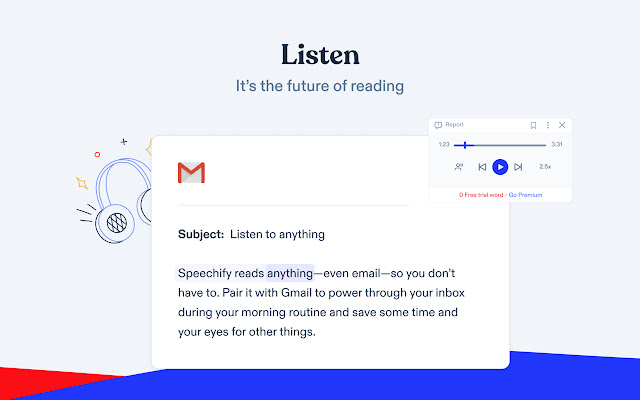
Speechify specializes in reading assistance, converting documents, articles, and PDFs into natural audio. With 50M+ users, it’s the leading TTS tool for dyslexia, ADHD, and accessibility needs.
Key Features and Benefits
- Document Reading: Upload PDFs, Word docs, web articles, or emails for instant audio conversion
- 200+ Premium Voices: Natural-sounding voices including celebrity voices (Snoop Dogg, Gwyneth Paltrow)
- Variable Speed: Adjust from 0.5× to 5× speed for faster consumption
- Cross-Platform: Available on iOS, Android, Chrome extension, Mac, and web
- 60+ Languages: Multilingual support for global content
- Offline Mode: Download audio for listening without internet
Pricing (2026)
- Free: 10 basic voices, 1.5× speed, limited features
- Premium Monthly: $29/month - 200+ voices, 5× speed, unlimited listening
- Premium Annual: $11.58/month ($139/year) - Save 60% vs monthly
- Free Trial: 3 days to test premium features
Sources: Speechify Pricing, SaaSworthy Breakdown, Fish Audio Comparison
Limitations
Free version has robotic voice quality. Premium required for natural voices. At $29/month or $139/year, more expensive than alternatives offering similar features.
Ideal Use Cases
Students with dyslexia, professionals multitasking (listening while commuting), language learners, writers proofreading content, accessibility users needing document reading.
4. Murf.ai - Best for Marketing Content
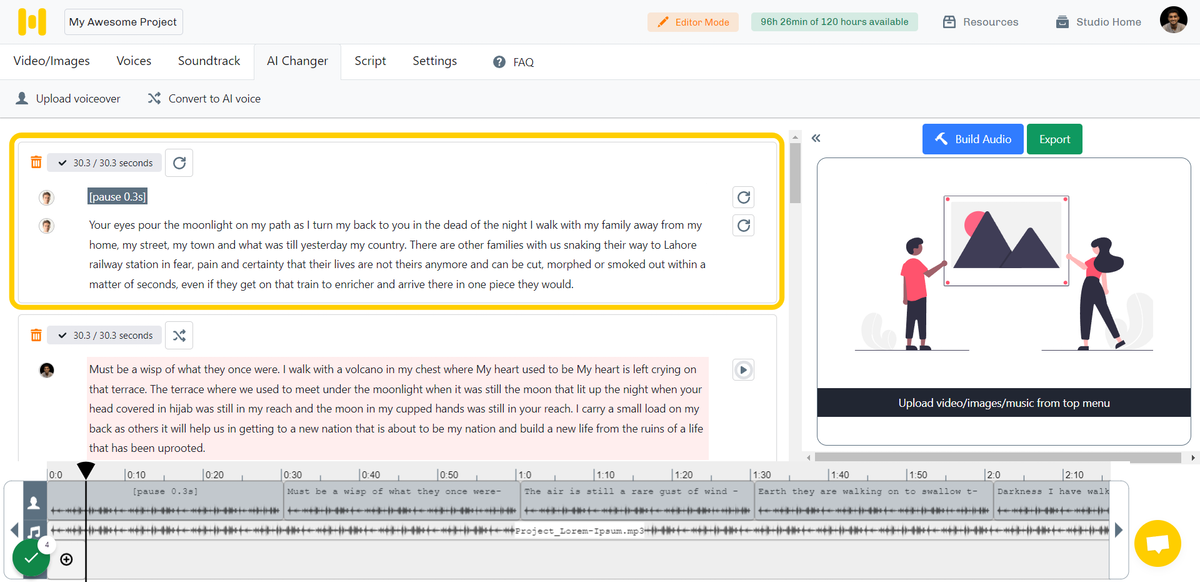
Murf.ai provides studio-quality voiceovers for marketing videos, presentations, and e-learning content. With 120+ AI voices and powerful customization, Murf excels at creating professional narration for business content.
Key Features and Benefits
- 120+ Studio Voices: Professionally recorded AI voices with emotional range across 20+ languages
- Voice Customization: Adjust pitch, speed, emphasis, and pauses for precise control
- Video Integration: Sync voiceovers with video timelines, add background music
- Collaboration Tools: Team workspaces, shared voice libraries, brand voice guidelines
- Voice Cloning: Create custom brand voices from audio samples
- Commercial Rights: Full commercial license included in paid plans
Pricing (2026)
- Free: 10 minutes of voice generation, limited voices
- Basic: $19/month annual ($13/month) - 24 hours audio/year, 120+ voices, downloads
- Pro: $26/month annual ($39/month) - All features, priority support, voice changer
- Enterprise: Custom pricing for teams, API access, dedicated support
Sources: Murf.ai Pricing, G2 Pricing, SaaSworthy
Limitations
Free plan limited to 10 minutes. No commercial rights on free tier. Requires downloads even on paid plans (no streaming playback in some contexts).
Ideal Use Cases
Marketing teams creating video ads, explainer videos, product demos. E-learning course creators, corporate training developers, presentation designers. Agencies producing client voiceovers at scale.
5. Play.ht - Best for Content Creators
Play.ht offers a massive selection of 900+ AI voices across 142 languages. With ultra-realistic voice cloning and a creator-focused platform, Play.ht serves podcasters, YouTubers, and content creators worldwide.
Key Features and Benefits
- 900+ AI Voices: Largest voice library with diverse accents, ages, and styles
- 142 Languages: Most comprehensive multilingual support in the industry
- Instant Voice Cloning: Clone any voice from 30-second samples
- Ultra-Realistic Generation: PlayHT 2.0 Turbo model delivers near-human quality
- Podcast Hosting: Built-in podcast distribution to Spotify, Apple Podcasts
- WordPress Plugin: One-click integration for blogs and news sites
- API Access: Robust developer API for custom integrations
Pricing (2026)
- Free: 12,500 characters/month, 1 instant voice clone, all voices (no commercial use)
- Creator: $19/month - 150k characters/month, commercial license, voice cloning
- Unlimited: $99/month - 2.5M characters (“fair use” limit), priority generation
- Business: $149.25/month - Custom quotas, dedicated support
Sources: Play.ht Pricing, G2 Pricing Info, TrustRadius
Limitations
Free tier doesn’t include commercial rights. “Unlimited” plan has 2.5M character fair use limit. Voice cloning quality varies with sample audio quality.
Ideal Use Cases
Podcasters with multilingual audiences, YouTubers needing diverse character voices, bloggers auto-generating audio versions, audiobook creators, voice-over artists producing client work.
6. Fish Audio - Best for Low-Latency TTS
Fish Audio combines professional-grade emotional control with ultra-low latency under 500 milliseconds, making it ideal for real-time conversational AI applications. At $5.50/month, it’s significantly cheaper than ElevenLabs while delivering comparable quality.
Key Features and Benefits
- Ultra-Low Latency: Sub-500ms response time, perfect for real-time applications
- Emotional Control: Capture subtle vocal details including breath patterns and tonal nuance
- Quick Voice Cloning: Requires only 10 seconds of reference audio (vs 30-60 seconds for competitors)
- Affordable Pricing: $5.50/month - 2-3× cheaper than ElevenLabs at similar quality
- Natural Speech: Advanced models deliver convincingly human-sounding speech
- API-First: Built for developers with robust API and streaming support
Pricing (2026)
- Free Trial: Limited testing available
- Starter: $5.50/month - Professional features at budget pricing
- Custom: Enterprise pricing for high-volume needs
Sources: Fish Audio Blog, Top 5 TTS Tools 2026
Limitations
Smaller voice library compared to ElevenLabs or Play.ht. Newer platform with less brand recognition. Documentation could be more comprehensive.
Ideal Use Cases
Developers building conversational AI, chatbots, voice assistants, real-time translation apps. Budget-conscious creators needing professional quality. Companies requiring fast voice cloning for customer service.
7. Narakeet - Best Pay-As-You-Go Pricing
Narakeet offers flexible top-up pricing with no subscriptions or recurring fees. With 900 AI voices and pay-per-minute billing, it’s perfect for occasional users who don’t need monthly plans.
Key Features and Benefits
- 900 AI Voices: Massive library covering 90+ languages and dialects
- No Subscription: Pay-as-you-go model - buy credits, use them whenever needed
- Video Automation: Create narrated videos from scripts with timeline syncing
- Credits Never Expire: Purchase once, use credits indefinitely
- Free Testing: Try 900 voices free up to 20 times without account creation
- Bulk Discounts: Larger purchases = cheaper per-minute rates
Pricing (2026)
- Free: 20 uses of any voice, no account required
- Pay-As-You-Go: $0.20/minute base rate ($6 for 30 minutes)
- Volume Discounts: Lower rates for larger credit purchases
- Billing: Per-second increments, no minimums
Sources: Narakeet Pricing, SoftwareSuggest, G2 Reviews
Limitations
Pay-per-use can get expensive for heavy users. No monthly unlimited option. Video automation features have learning curve.
Ideal Use Cases
Occasional users who don’t need monthly subscriptions, agencies billing clients per project, educators creating periodic course content, individuals with sporadic voiceover needs.
8. Lovo.ai - Best Voice Cloning Technology
Lovo.ai specializes in advanced voice cloning, allowing users to create custom AI voices that sound like specific people. With 500+ voices and Genny video editor integration, Lovo serves professional content creators.
Key Features and Benefits
- Professional Voice Cloning: Create custom voices from 10 minutes of audio samples
- 500+ AI Voices: Extensive library including celebrity-style voices
- 100+ Languages: Global multilingual support
- Genny Video Editor: Built-in video editor with AI voiceover integration
- Emotion Control: Fine-tune emotional expression and delivery style
- Commercial License: Full rights for commercial voice use
Pricing (2026)
- Free Trial: 14-day trial to test features
- Basic: $24/month - Voice generation with commercial license
- Pro: $48/month - Voice cloning, priority generation
- Pro+: $149/month - Advanced features, API access
Note: Pricing varies based on features selected. Annual plans offer discounts.
Limitations
Higher pricing than competitors. Voice cloning requires significant audio samples. Free trial limited to 14 days.
Ideal Use Cases
Professional voiceover artists, audiobook producers, game developers needing character voices, marketing teams creating brand voices, content creators with unique voice requirements.
9. Google Cloud Text-to-Speech - Best for Developers
Google Cloud TTS offers WaveNet and Neural2 voices with pay-as-you-go pricing. Ideal for developers integrating text-to-speech into applications, with robust APIs and global infrastructure.
Key Features and Benefits
- WaveNet Voices: Premium neural voices with exceptional quality
- 220+ Languages: Most extensive language support available
- SSML Support: Fine-grained control over pronunciation, emphasis, pauses
- Audio Profiles: Optimize for phone calls, headphones, or speakers
- Global Infrastructure: Low-latency delivery worldwide
- Custom Voice: Create brand-specific voices (enterprise)
Pricing (2026)
- Free Tier: 1 million characters/month (Standard voices), 0-4M chars free (WaveNet)
- Standard: $4 per 1M characters
- WaveNet/Neural2: $16 per 1M characters
- Custom Voice: Enterprise pricing
Ideal Use Cases
Mobile app developers, enterprise applications, Google Cloud ecosystem users, global products needing multilingual TTS.
10. Azure Text to Speech - Best for Enterprises
Microsoft Azure TTS provides enterprise-grade text-to-speech with 140+ languages, custom neural voices, and integration with Microsoft 365 ecosystem.
Key Features and Benefits
- Neural TTS: High-quality neural voices across 140+ languages
- Custom Neural Voice: Train custom voices with your audio data
- SSML Support: Advanced speech synthesis markup
- Real-Time Synthesis: Low-latency streaming for conversational AI
- Microsoft Integration: Works with Teams, Office, Azure services
- Compliance: SOC, HIPAA, ISO certifications
Pricing (2026)
- Free Tier: 500,000 characters/month
- Standard: $4 per 1M characters
- Neural: $15 per 1M characters
- Custom Neural Voice: $1.5-6/hour training + usage fees
Ideal Use Cases
Enterprise applications, Microsoft 365 users, healthcare/finance (compliance requirements), Azure ecosystem developers, custom voice branding projects.
11. Amazon Polly - Best for AWS Ecosystem
Amazon Polly delivers natural TTS voices with seamless AWS integration. Perfect for developers already using AWS services needing reliable, scalable text-to-speech.
Key Features and Benefits
- Neural TTS: Lifelike voices using neural network technology
- 60+ Languages: Broad language and dialect support
- SSML & Lexicons: Customize pronunciation and speech patterns
- Speech Marks: Precise timing for lip-sync applications
- Newscaster Style: Professional news reading voice style
- AWS Integration: Works natively with Lambda, S3, CloudFront
Pricing (2026)
- Free Tier: 5 million characters/month (first 12 months)
- Standard: $4 per 1M characters
- Neural: $16 per 1M characters
Ideal Use Cases
AWS developers, serverless applications (Lambda functions), mobile apps on AWS, content delivery networks, IoT voice applications, Alexa skill developers.
How to Choose the Right Free AI Voice Generator for Your Needs
Choosing the right AI voice generator depends on a variety of factors specific to your needs:
- Use-case: Are you creating voice-overs for videos, looking for reading assistance, or generating voices for game characters? The specific use case will significantly impact your choice.
- Quality of voice output: The naturalness and clarity of the AI voice can affect listener engagement. Make sure to select a generator that offers high-quality voice output.
- Voice Options: Consider the variety of voices available. Do you need a specific accent, gender, or age group? Some generators offer a broader selection than others.
- Language Support: If you need voices in languages other than English, check the language support provided by the generator.
- Ease of Use: The user-friendliness of the platform can significantly affect your experience. An intuitive interface can make the process of generating voices smoother.
Here are some tips for testing and comparing different options:
- Free Trials: Make the most of the free versions or trials provided by these platforms. They allow you to test the voice quality, check the ease of use, and assess whether the generator suits your needs.
- Compare Side-by-Side: Generate the same piece of text using different generators and compare the voice output side-by-side. This comparison can help you assess the relative quality and naturalness of the voices.
- Feedback: Get feedback from others. If the voice is meant for a public audience (like for a video or a presentation), it can be helpful to get feedback from colleagues or friends.
Potential Use Cases for AI Voice Generators
AI voice generators, with their ability to create high-quality, natural-sounding voices, have a plethora of potential applications in various fields:
- Video Narration: From YouTube content creators to professional filmmakers, AI voices can be used to provide clear, engaging narration for videos. For video content creation workflows, explore our AI tools for video guide.
- Podcasting: AI voices can convert scripts into natural-sounding speech, making podcast production more accessible and efficient.
- Accessibility: AI voice generators make digital content more accessible for visually impaired individuals or those with reading difficulties by converting text into speech.
- E-learning: From online courses to language learning apps, AI voices can facilitate a more interactive and engaging learning experience.
- Voice Assistants: AI voices power our virtual assistants, like Siri, Alexa, and Google Assistant, making our interaction with technology more natural and intuitive.
For professionals who need to process and analyze voice content, our best audio summarizers and top 10 audio notetakers guides cover advanced audio processing workflows.
Case Study
Consider the example of a small e-learning startup that wanted to create a series of online courses. Hiring professional voice actors for the narration was beyond their budget. They turned to an AI voice generator, which allowed them to produce clear, engaging voiceovers for their video lessons at a fraction of the cost.
Future of AI Voice Generators
As we look ahead, the future of AI voice generators appears bright with potential. Here are a few trends and improvements we can expect:
- Improved Naturalness: The quality of AI voices is continually improving, with newer models sounding more natural and human-like. Future AI voice generators are expected to further close the gap between synthetic and human voices.
- Expressive Speech: Future AI voice generators may be better at capturing the expressiveness of human speech, conveying emotions more accurately and enhancing the listener’s experience.
- Customization: We can expect to see more voice generators offering personalized voice cloning, allowing users to create AI versions of their own voice.
- Ethical Usage: As technology advances, more guidelines and regulations may be established to ensure the ethical use of AI voice technology.
Understanding The Technology Behind AI Voice Generators
Delving deeper into how AI voice generators function, we find two key technologies at their heart: Natural Language Processing (NLP) and Text-to-Speech (TTS) synthesis.
- Natural Language Processing (NLP): NLP is a field of AI that deals with the interaction between computers and human language. It enables the system to understand, interpret, and generate human language in a meaningful way. In the context of AI voice generators, NLP is used to analyze the input text, determining sentence structure, grammar, and context to ensure accurate pronunciation and emphasis during conversion.
- Text-to-Speech (TTS) Synthesis: Once the text is processed, it is passed to the TTS system. This technology converts processed text into spoken words. It uses databases of recorded speech, machine learning algorithms, and complex rules to produce speech that mirrors human voices. The sophistication of TTS technology can greatly impact the naturalness and expressivity of the AI-generated voice.
The Role of Machine Learning in AI Voice Generators
Machine learning, a subset of artificial intelligence, plays a critical role in the functionality of AI voice generators. Its algorithms learn from large amounts of data, which, in this case, is countless hours of human speech. The algorithm learns the intricacies of how human speech works, including the subtleties of pronunciation, rhythm, tone, and emphasis.
By training on diverse datasets, these machine-learning models can replicate various accents, speech patterns, and languages, contributing to the realism of AI-generated voices. Additionally, they continue to learn and adapt over time, constantly improving their speech synthesis capabilities. This continual learning leads to an enhanced user experience as the AI voice becomes more natural and human-like.
Ethical Considerations in Using AI Voice Generators
The use of AI voice generators, while packed with potential, does not come without ethical considerations:
- Consent: When it comes to voice cloning or impersonation, consent becomes a crucial factor. The unauthorized use or imitation of someone’s voice raises significant ethical concerns.
- Authenticity: As AI-generated voices become more realistic, the line between real and synthetic voices could blur. This might lead to authenticity issues, potentially enabling misinformation and deception.
- Misuse: Like many technologies, AI voice generators could also be misused. For instance, they could be used to create false narratives or deepfake audio, tricking people into believing something untrue.
It’s important that these ethical considerations are taken into account, and appropriate measures, like clear user agreements and robust legal frameworks, are put in place to guide the use of AI voice technology.
Evaluation Criteria for AI Voice Generators
In ranking the top 10 free AI voice generators, we considered several aspects:
- Voice Quality: We looked at the naturalness and clarity of AI-generated voices. The less robotic and more human-like the voice, the higher the quality.
- Variety: We considered the range of voices, accents, and languages the tool offers. A greater variety provides users with more options and flexibility.
- User Interface: We evaluated how user-friendly the platform is. An intuitive and easy-to-navigate interface enhances the user experience.
- Features: We looked at the unique features each tool offers, such as voice cloning, emotion modulation, and integration capabilities.
- Limitations: We took into account the limitations of the free versions, such as usage caps, restricted features, and watermarks.
- Reviews and User Feedback: We also considered reviews and feedback from users to evaluate the tool’s performance and reliability.
Professional Use-cases vs. Personal Use-cases
The use of AI voice generators can vary widely depending on whether they are used for professional or personal purposes:
- Professional Use-cases: In a professional context, the requirements for AI voice generators can be more demanding. For example, in video production or marketing, the voice quality needs to be exceptionally high to ensure viewer engagement. The ability to customize the voice in terms of speed, pitch, and tone could also be vital. In business settings, the ability to support multiple languages and accents becomes important, especially in global organizations. Additionally, integration capabilities with other software or platforms may be a key requirement.
- Personal Use-cases: For personal use, such as hobby projects or accessibility needs, the considerations might be different. The user-friendliness of the platform, the naturalness of the voice, and the availability of free options might be prioritized. In terms of accessibility, the software’s ability to read different types of documents, compatibility with various devices, and ease of use become essential factors.
Handling Different Languages and Accents
With the increasingly global nature of our digital world, the capability of AI voice generators to handle different languages and accents is a significant advantage. Many AI voice generators offer a range of languages and accents, allowing users from around the globe to generate voices that cater to their specific audience or personal needs. This linguistic diversity not only widens the reach of these tools but also enhances their usability for international users.
The Impact of AI Voice Generators on Industries
AI voice generators are having a transformative impact on various industries:
- Education: In the education sector, AI voices are enhancing the accessibility and interactivity of learning materials. They can also be used to develop language learning apps, making the learning process more engaging.
- Entertainment: For the entertainment industry, AI voices are revolutionizing the creation of voice-overs for animation, films, and video games. They offer cost-effective and quick solutions, making content creation more efficient.
- Advertising: In advertising, AI voices provide a dynamic way to create personalized customer experiences. They can be used in interactive ads, virtual assistants, and more, engaging customers in innovative ways.
For content creators working across multiple formats, our AI tools for video and best free AI video generator tools guides provide comprehensive workflows for multimedia content creation.
Accessibility and AI Voice Generators
AI voice generators are playing a crucial role in enhancing digital accessibility, particularly for users with visual impairments or other disabilities that make reading text challenging. By converting text into speech, these tools make digital content auditory, enabling more users to access information, engage with digital platforms, and participate in the digital world.
For example, AI voices can read out articles, emails, or digital documents, aiding visually impaired users. They can also assist individuals with dyslexia or other reading difficulties by converting text into speech, providing a different medium to process the information. With advancements in AI voice technology, such as improved naturalness of speech and expressive modulation, the listening experience becomes more engaging and easier to comprehend.
AI Voice Generators and Data Privacy
Data privacy is a crucial concern in the realm of AI voice generators, especially with features like voice cloning. Users provide text input and sometimes voice samples, raising questions about how this data is stored, used, and protected.
Many AI voice generators take data privacy seriously. They implement strong security measures, like encryption, to protect user data. They also often have clear privacy policies outlining their data handling practices. For instance, some platforms commit to not storing voice data beyond a certain period or using the data only to enhance the service without sharing it with third parties.
However, it’s essential for users to review and understand these privacy policies before using the services. When it comes to voice cloning, users should be fully aware of the potential risks and the platform’s data handling practices.
The Potential of Customizable AI Voice Generators
Customizable AI voices represent a significant trend in the field of AI voice generators. These tools allow users to modify various aspects of the voice, such as pitch, speed, and tone, to create a customized voice output. More advanced tools even enable voice cloning, allowing users to generate an AI version of their own voice.
The rise of customizable AI voices opens up a wealth of possibilities. Content creators can adjust the voice to match the mood of their content, enhancing audience engagement. Inaccessibility, users can adjust the speech output to match their listening preferences, making the audio content more enjoyable and easier to understand.
In a business setting, brands can create a unique AI voice that aligns with their brand personality, providing a consistent auditory experience across different platforms. As the technology behind customizable AI voices continues to improve, we can expect to see even more innovative applications in the future.
User Reviews and Experiences
Real-life user reviews and experiences provide valuable insights into the practical use of AI voice generators. While we can’t share specific reviews here, we can summarize some common feedback across various platforms:
- Users often appreciate the ease of use offered by many AI voice generators, with intuitive interfaces and straightforward text-to-speech conversion processes.
- The quality of voice output is frequently praised, with many users highlighting the naturalness and clarity of the generated voices.
- The variety of voice and language options is another feature that users value, especially for creating diverse content or for international users.
- Users have noted that customization features, such as adjusting speech speed or pitch, greatly enhance the tool’s versatility.
- Some users expressed concerns over the limitations of free versions, with usage caps and restricted features occasionally making the tools less useful for large-scale or frequent use.
These reviews highlight the strengths and potential areas for improvement in AI voice generators, providing practical insights that can guide potential users.
Looking Ahead: Upcoming Innovations in AI Voice Technology
As we look toward the future, several exciting innovations are expected in the field of AI voice technology:
- Increased Naturalness: With continued advancements in machine learning algorithms, we can expect even more natural-sounding AI voices. Future tools will likely better capture the nuances of human speech, including subtle variations in pronunciation and rhythm.
- Emotional Expressivity: Future AI voice generators might be better able to express emotions, which could greatly enhance the realism of the voice output. This has significant potential for fields like entertainment, where conveying emotion is crucial.
- Personalized Voices: The trend of customizable AI voices is likely to continue, with future tools potentially offering even more advanced customization options. This could include creating unique AI voices based on user voice samples or fine-tuning the voice output in more detailed ways.
Conclusion: Choosing the Best AI Voice Generator in 2026
The AI voice generation landscape in 2026 offers unprecedented quality and accessibility. From ScreenApp’s integrated video platform at $19/month to ElevenLabs’ industry-leading realism and budget-friendly Fish Audio at $5.50/month, there’s a solution for every need and budget.
Key Takeaways:
- For Video Creators: ScreenApp ($19/month annual) integrates TTS with recording, transcription, and AI chat - eliminating tool switching
- For Premium Quality: ElevenLabs ($5-99/month) delivers the most realistic voices with emotional depth and voice cloning
- For Budget Users: Fish Audio ($5.50/month) and Narakeet ($0.20/min) offer professional quality at minimal cost
- For Reading Assistance: Speechify ($11.58/month annual) excels at document conversion with cross-platform support
- For Developers: Google Cloud TTS, Azure TTS, and Amazon Polly provide robust APIs with enterprise-grade reliability
Price Comparison:
- Most affordable: Fish Audio ($5.50/month) and Narakeet (pay-as-you-go)
- Best value: ScreenApp ($19/month) includes video tools beyond just TTS
- Premium tier: ElevenLabs Pro ($99/month) for professional voiceover work
The future of AI voice technology continues advancing toward even more natural speech, real-time emotional expression, and seamless multilingual capabilities. Neural networks now capture subtle breath patterns, tonal shifts, and conversational nuances that were impossible just two years ago.
Whether you’re creating YouTube videos, audiobooks, e-learning courses, marketing content, or accessibility tools, 2026’s AI voice generators deliver professional results without expensive recording studios or voice actors. Test the free tiers, compare voice quality for your specific use case, and choose the platform that best aligns with your workflow and budget.
Start with ScreenApp’s free 3-video tier or ElevenLabs’ 10k character free plan to experience the transformative power of modern text-to-speech technology.
AI Voice Generator FAQs 2026
What is an AI voice generator?
An AI voice generator is a software tool that uses neural networks and machine learning to convert text into natural-sounding speech. Modern AI voice generators in 2026 produce near-human quality voices with emotional expression, breath patterns, and natural intonation.
What are the best free AI voice generators in 2026?
The top free AI voice generators include ScreenApp (3 videos/month), ElevenLabs (10k characters/month), Play.ht (12,500 characters), Google Cloud TTS (1M characters), and Narakeet (20 free uses). ScreenApp offers the best value with no watermarks and commercial usage rights even on the free tier.
How much does AI voice generation cost?
AI voice generator pricing ranges from $5.50/month (Fish Audio) to $99/month (ElevenLabs Pro) for subscription plans. Cloud providers like Google, Azure, and AWS charge $4-16 per million characters. ScreenApp offers the best all-in-one value at $19/month annual with video tools included.
How to choose the right free AI voice generator for my needs?
The right AI voice generator should fit your specific use-case, offer a quality voice output, have a range of voice options, and support your required language. It’s also beneficial to test and compare different options.
What are some potential ethical issues with AI voice generators?
Ethical issues with AI voice generators can include matters of consent, authenticity, and potential misuse of the technology, especially in creating deepfakes or unauthorized impersonations.
How do AI voice generators handle different languages and accents?
Modern AI voice generators are capable of handling multiple languages and a variety of accents, making them suitable for international users and diverse content creation.
What is the future of AI voice generators?
The future of AI voice generators includes more natural-sounding voices, improved emotional expressivity, and enhanced customization options, which could further expand their usability and potential applications.
Are AI voice generators safe in terms of data privacy?
Most reputable AI voice generators ensure user data privacy by not storing or sharing personal data. However, privacy policies may vary, and it’s essential to review these before using any AI voice generator.
What are some professional use-cases for AI voice generators?
Professional use-cases for AI voice generators include creating voice-overs for video production, generating engaging audio content for marketing, and developing interactive voices for business software or virtual assistants.
How do AI voice generators contribute to digital accessibility?
AI voice generators enhance digital accessibility by converting text into speech, making content accessible for individuals with visual impairments or reading difficulties.
What is voice cloning in AI voice generators?
Voice cloning in AI voice generators is a feature that allows the creation of a synthetic version of a specific human voice, often based on a sample of that voice provided by the user.
How does machine learning contribute to AI voice generators?
Machine learning contributes to AI voice generators by training on large datasets of human speech to learn and replicate the nuances of human language, tone, accent, and speech patterns, thereby producing more natural and realistic voices.
What are the limitations of free AI voice generators?
Limitations of free AI voice generators often include restrictions on the number of voice conversions per month, limited access to certain features, and potential watermarks in the audio output. These limitations vary depending on the specific tool.
What innovations can we expect in the future of AI voice generation?
Future innovations in AI voice generation may include increased naturalness and expressivity, advanced voice customization options, and enhanced integration capabilities with other software or platforms.
How does text-to-speech technology work in AI voice generators?
Text-to-speech technology in AI voice generators works by analyzing input text to determine sentence structure, context, and pronunciation. It then converts this processed text into spoken words using databases of recorded speech and machine learning algorithms.
FAQ
An AI voice generator is a software tool that uses neural networks and machine learning to convert text into natural-sounding speech. Modern AI voice generators in 2026 produce near-human quality voices with emotional expression, breath patterns, and natural intonation. #### What are the best free AI voice generators in 2026? The top free AI voice generators include ScreenApp (3 videos/month), ElevenLabs (10k characters/month), Play.ht (12,500 characters), Google Cloud TTS (1M characters), and N